About 14 Stages Diffusion Cell Apparatus Sampling System
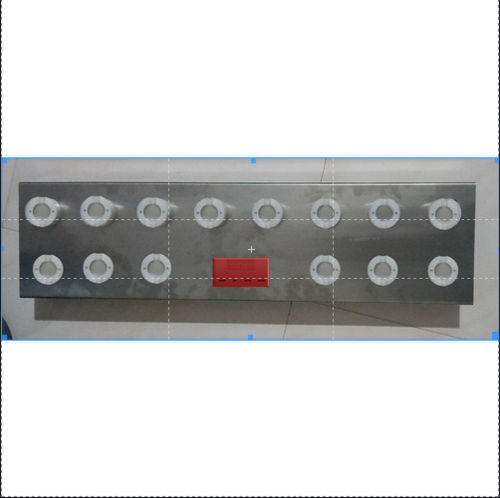
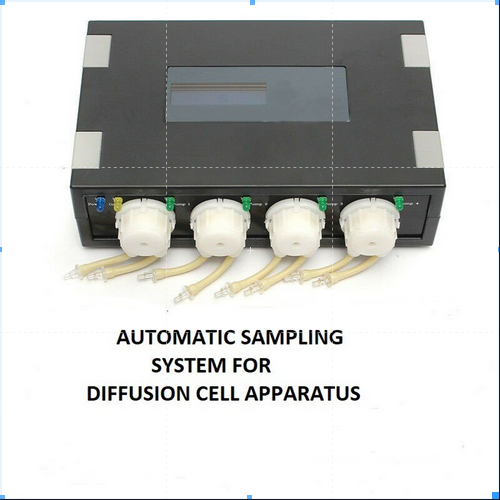
14 stages diffusion cell apparatus having 14 stages means user can place at the same time 14 diffision cell, in addition to 14 stages our apparatus having semi tuto sampling system which gives user friendly sampling without any hectic work, to avoid introduction of air bubbles in the media of receptor cell
| Material |
SS |
| Shape |
Rectangular |
| Usage/Application |
Biological research |
| Capacity |
14 Cells |
| Temperature Range |
37 Degree Celcius |
| Automation Type |
Semi-Automatic |
| Color |
Grey |
| Operating Voltage |
240 V AC |
| Length |
82 CM |
| Width |
22 CM |
| Height |
15 CM |
| Built Type |
Yes |
| Controller Type |
Micro-Computer |
| Indicator |
Digital |
| Is It Portable |
Yes |
Advanced Multi-Stage Sampling CapabilityDesigned for efficiency, the DC-14S houses 14 individual diffusion cells, enabling simultaneous sampling across stages for complex skin permeation and pharmaceutical research. Each cell is equipped with a magnetic stirrer and dedicated sampling port to ensure uniform mixing and easy sample retrieval.
Precision Temperature Control and SafetyA high-precision immersion heater paired with an integrated thermostatic water bath maintains stable temperatures up to 50C, accurate within 0.1C. The digital control panel allows for easy adjustment and monitoring, while rigorous safety features-such as over-temperature cutoff and alarms-protect samples and users throughout the process.
Optimized for Compliance and PerformanceBuilt from robust borosilicate glass and stainless steel, the DC-14S meets USP and IP guidelines, supporting reliable and repeatable pharmaceutical testing. Its semi-automatic operation, customizable capacity, and user-friendly LCD display make it a trusted tool for manufacturers, exporters, and suppliers in pharmaceutical research settings.
FAQ's of 14 Stages Diffusion Cell Apparatus Sampling System:
Q: How does the 14 Stages Diffusion Cell Apparatus facilitate skin permeation studies?
A: The apparatus enables simultaneous sampling across 14 individual cells, each representing a separate stage, allowing researchers to evaluate skin permeation rates and profiles efficiently. Magnetic stirring in each cell ensures uniform mixing, providing consistent and reproducible results for transdermal drug delivery testing.
Q: What are the temperature control capabilities of the DC-14S model?
A: This system features a digital control panel and a high-precision immersion heater, offering temperature ranges from ambient up to 50C. The thermostatic water bath maintains stability within 0.1C, ensuring precise thermal conditions for sensitive pharmaceutical processes.
Q: When should individual cell volumes be customized for laboratory applications?
A: Customizing the cell volume is recommended when specific experimental protocols require different solution volumes than the standard 20 ml, allowing adaptation to varied permeation studies or regulatory requirements in pharmaceutical research.
Q: Where is the DC-14S diffusion cell apparatus typically used?
A: It is primarily used in pharmaceutical laboratories for research applications such as skin permeation, transdermal delivery studies, and quality control, as well as in manufacturing and export facilities for product development testing.
Q: What is the process for obtaining samples from each diffusion cell?
A: Each cell has its own sampling port, allowing easy, non-intrusive extraction of samples during the experiment. This facilitates multi-stage sampling without disrupting the ongoing diffusion study or affecting other cells.
Q: How does the device enhance safety during operation?
A: Safety is prioritized through an over-temperature cutoff mechanism and integrated alarms, which help prevent equipment and sample damage, while the robust construction with borosilicate glass and stainless steel ensures chemical resistance and structural durability.
Q: What benefits does the multi-stage sampling design offer for pharmaceutical research?
A: The multi-stage system allows simultaneous, real-time monitoring across 14 cells, boosting laboratory productivity and yielding comprehensive permeation data. This design supports precise compliance with USP and IP standards, essential for reliable pharmaceutical analysis.






 Send Inquiry


 Send Inquiry
 Send Inquiry
 Send SMS