About Co2 Euthanasia Chamber
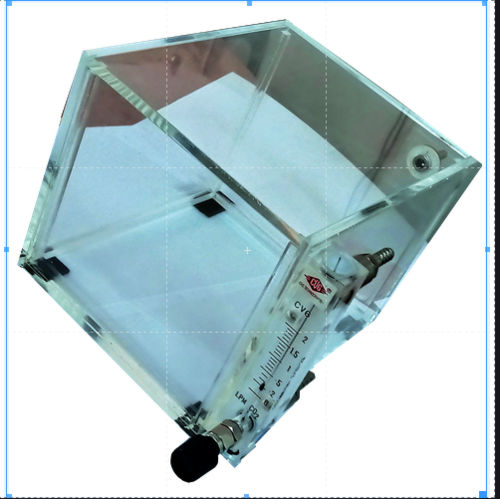
In the euthanasia chamber setup, a CO2 cylinder is connected via tubing to one end (Lower End) of a flow controller, while the other end of the flow controller (Upper End) is connected to the Upper nozzle of the chamber. The chamber is designed to be airtight. When the user initiates CO2 flow using the flow controller, the density of CO2 is being higher than that of oxygen (O2), results in CO2 filling the chamber from the bottom to the top. This directional flow ensures that CO2 is first introduced into the lower portion of the chamber and gradually fills upward.
| Capacity |
10 Litre |
| Automation Grade |
Semi Automatic |
| Display Type |
Analog |
| Number Of Trays |
2 |
| Material |
SS |
Humane and Safe Animal EuthanasiaDesigned for use in laboratories and veterinary institutes, the chamber ensures adherence to AVMA guidelines for the euthanasia of animals, providing a controlled, safe, and humane environment for small mammals such as rats and mice. The airtight system and safety features protect both animals and operators.
Robust and Transparent BuildConstructed from high-quality 8 mm polycarbonate with acrylic and stainless steel components, the chamber is both durable and easy to monitor, thanks to its transparent walls. The secure locking lid, integrated handles, and leak-proof sealing make it reliable for intensive use and effortless to transport.
Ease of Operation and MaintenanceWith manual, analog operation requiring only an external CO2 cylinder, setup is straightforward. The removable lid and smooth interior surfaces allow for rapid and thorough cleaning after each use. Comprehensive user instructions and optional accessories facilitate safe and accurate handling every time.
FAQs of Co2 Euthanasia Chamber:
Q: How does the CO2 euthanasia chamber ensure animal safety during operation?
A: This chamber features an 8 mm thick polycarbonate construction with an airtight silicone gasket on the secure locking lid. Additionally, the integrated pressure relief port guarantees that internal pressure remains safe, preventing over-pressurization and ensuring humane conditions.
Q: What types of animals are compatible with this CO2 euthanasia chamber?
A: The chamber is specifically designed for rats, mice, and other small mammals, making it suitable for animal laboratories and veterinary institutes. Its generous capacity accommodates multiple rodents, while maintaining comfort and compliance with ethical guidelines.
Q: What are the steps involved in operating this euthanasia chamber?
A: Begin by connecting an external CO2 cylinder to the standard 1/4 inch quick coupling. Follow the step-by-step instructions provided in the user manual, adjusting the gas flow using optional regulators or flowmeters for precise control. The process is manual, ensuring full oversight throughout euthanasia.
Q: How should the chamber be cleaned after use?
A: The chambers removable lid and smooth interior walls are designed to make cleaning quick and effective. After each procedure, the lid can be detached, and all surfaces wiped or rinsed as needed, allowing for thorough disinfection and odor removal.
Q: Where can this euthanasia chamber be used?
A: It is intended for use in animal research laboratories, veterinary institutions, and other facilities that require humane and compliant rodent euthanasia. Its portable design allows effortless relocation within or between workspaces.
Q: What are the primary benefits of this CO2 euthanasia chamber for laboratories?
A: Laboratories benefit from its robust, leak-proof construction, high sealing efficiency, clear observation, and adherence to international euthanasia standards. The chambers easy cleaning, manual control, and optional accessories streamline workflow and enhance operator safety.
Q: When should the pressure relief port be checked, and why is it important?
A: Before every use, inspect the pressure relief port to ensure it is unblocked and functional. Its role is to prevent dangerous over-pressurization by automatically venting excess gas, safeguarding both animals and handlers during operation.





 Send Inquiry


 Send Inquiry
 Send Inquiry
 Send SMS